Why 2026 Will Be the Turning Point for Search & Rescue Robotics

Why 2026 Will Be the Turning Point for Search & Rescue Robotics

Why 2026 Will Be the Turning Point for Search & Rescue Robotics

Why 2026 Will Be the Turning Point for Search & Rescue Robotics

reops-autonomous-search-and-rescue-robot-earthquake

Released on

Released on

Jan 1, 2026

Read

Read

6 min

Category

Category

Robotics & Disaster Response

Why Disaster Response Needs ReOps in 2026

Why Disaster Response Needs ReOps in 2026

Natural disasters are becoming more frequent, intense, and complex. Earthquakes, floods, landslides, and industrial accidents increasingly strike densely populated urban environments. In these situations, the difference between life and death is often measured in minutes, not hours.

Yet even today, first responders are forced to risk their lives inside unstable structures, toxic environments, and confined spaces with little visibility.
This is where search and rescue robotics becomes essential.

ReOps is built around this reality.
2026 marks a turning point where robotics transitions from experimental research to frontline disaster-response deployment.

Natural disasters are becoming more frequent, intense, and complex. Earthquakes, floods, landslides, and industrial accidents increasingly strike densely populated urban environments. In these situations, the difference between life and death is often measured in minutes, not hours.

Yet even today, first responders are forced to risk their lives inside unstable structures, toxic environments, and confined spaces with little visibility.
This is where search and rescue robotics becomes essential.

ReOps is built around this reality.
2026 marks a turning point where robotics transitions from experimental research to frontline disaster-response deployment.

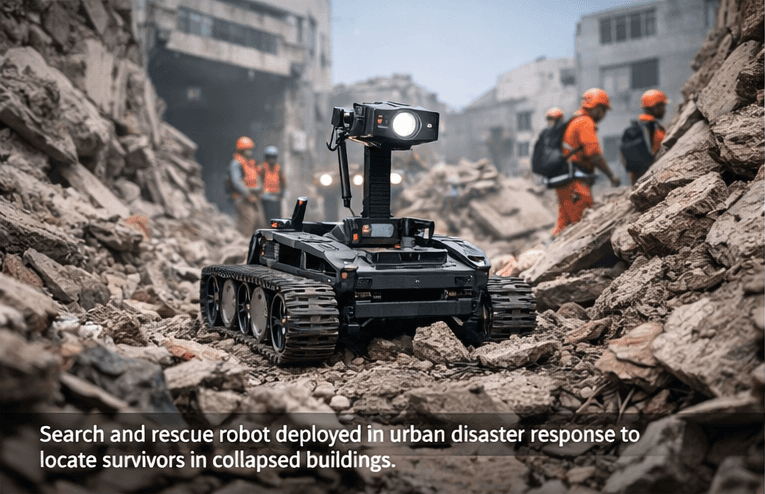
Search and rescue robot deployed in urban disaster response to locate survivors in collapsed buildings

The Growing Challenges of Modern Disasters

The Growing Challenges of Modern Disasters

Modern disaster response faces three critical challenges:

  • Urban density: Collapsed buildings create voids inaccessible to humans

  • Time sensitivity: The golden hour for rescue is often lost due to access delays

  • Responder safety: Secondary collapses, toxic gases, and fires threaten rescue teams

Studies consistently show that many disaster fatalities occur not due to impact, but due to delayed rescue caused by inaccessibility.

This is the gap ReOps addresses-deploying robotic systems where human capability reaches its limits.

Modern disaster response faces three critical challenges:

  • Urban density: Collapsed buildings create voids inaccessible to humans

  • Time sensitivity: The golden hour for rescue is often lost due to access delays

  • Responder safety: Secondary collapses, toxic gases, and fires threaten rescue teams

Studies consistently show that many disaster fatalities occur not due to impact, but due to delayed rescue caused by inaccessibility.

This is the gap ReOps addresses-deploying robotic systems where human capability reaches its limits.

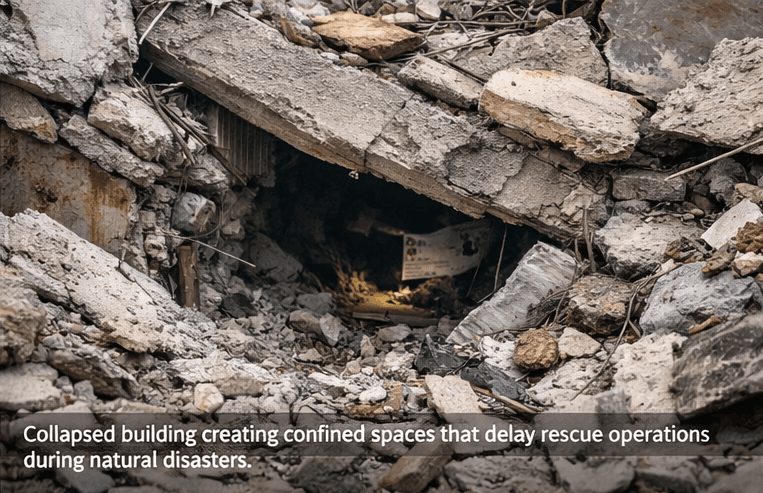
Collapsed building creating confined spaces that delay rescue operations during natural disasters

Why Traditional Rescue Methods Are No Longer Enough

Why Traditional Rescue Methods Are No Longer Enough

Conventional rescue tools each have major limitations:

  • Drones cannot enter collapsed interiors

  • Human rescuers face extreme physical danger

  • Cameras and probes require direct line-of-sight

  • Heavy machinery risks further collapse

What disaster response truly needs is a system that can:

  • Navigate tight, unpredictable spaces

  • Adapt its shape to the environment

  • Operate safely where humans cannot

This is where ReOps search and rescue robotics, designed for confined-space navigation, provides a clear advantage.

Conventional rescue tools each have major limitations:

  • Drones cannot enter collapsed interiors

  • Human rescuers face extreme physical danger

  • Cameras and probes require direct line-of-sight

  • Heavy machinery risks further collapse

What disaster response truly needs is a system that can:

  • Navigate tight, unpredictable spaces

  • Adapt its shape to the environment

  • Operate safely where humans cannot

This is where ReOps search and rescue robotics, designed for confined-space navigation, provides a clear advantage.

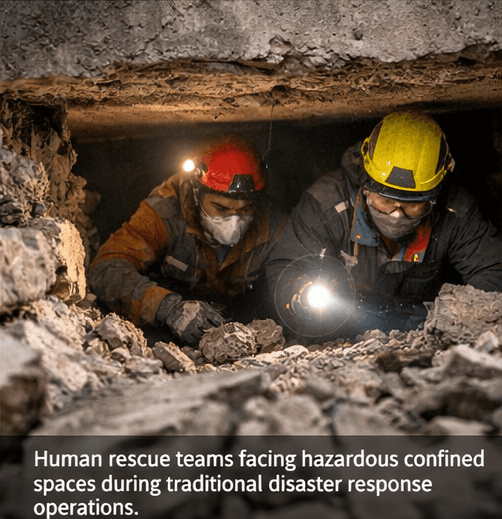
Human rescue teams facing hazardous confined spaces during traditional disaster response operations

Bio-Inspired Robotics and What Makes ReOps Different

Nature has already solved complex mobility problems. Snakes can slither through narrow gaps, climb uneven debris, and maintain stability across chaotic terrain.

Bio-inspired snake robotics, the foundation of ReOps systems, applies these principles to disaster response—allowing robots to adapt to the environment instead of forcing the environment to adapt to machines.

In 2026, modern rescue robots are defined by:

  • Modular architecture for mission-specific configuration

  • Multi-sensor intelligence (LiDAR, thermal, gas, biometric sensing)

  • Autonomous navigation in zero-visibility environments

  • Real-time data transmission to command centers

These capabilities allow ReOps robotic systems to enter first, assess hazards, and guide human teams safely.
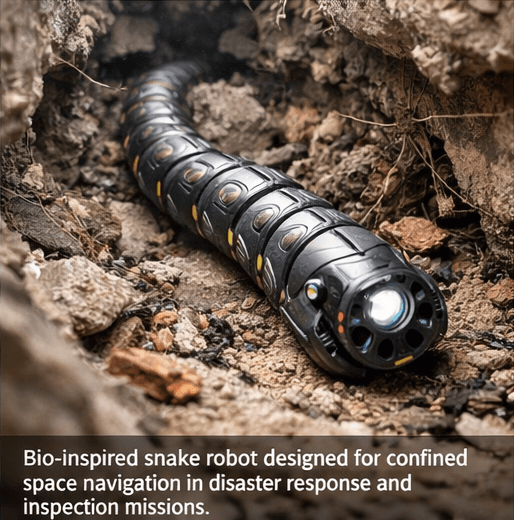
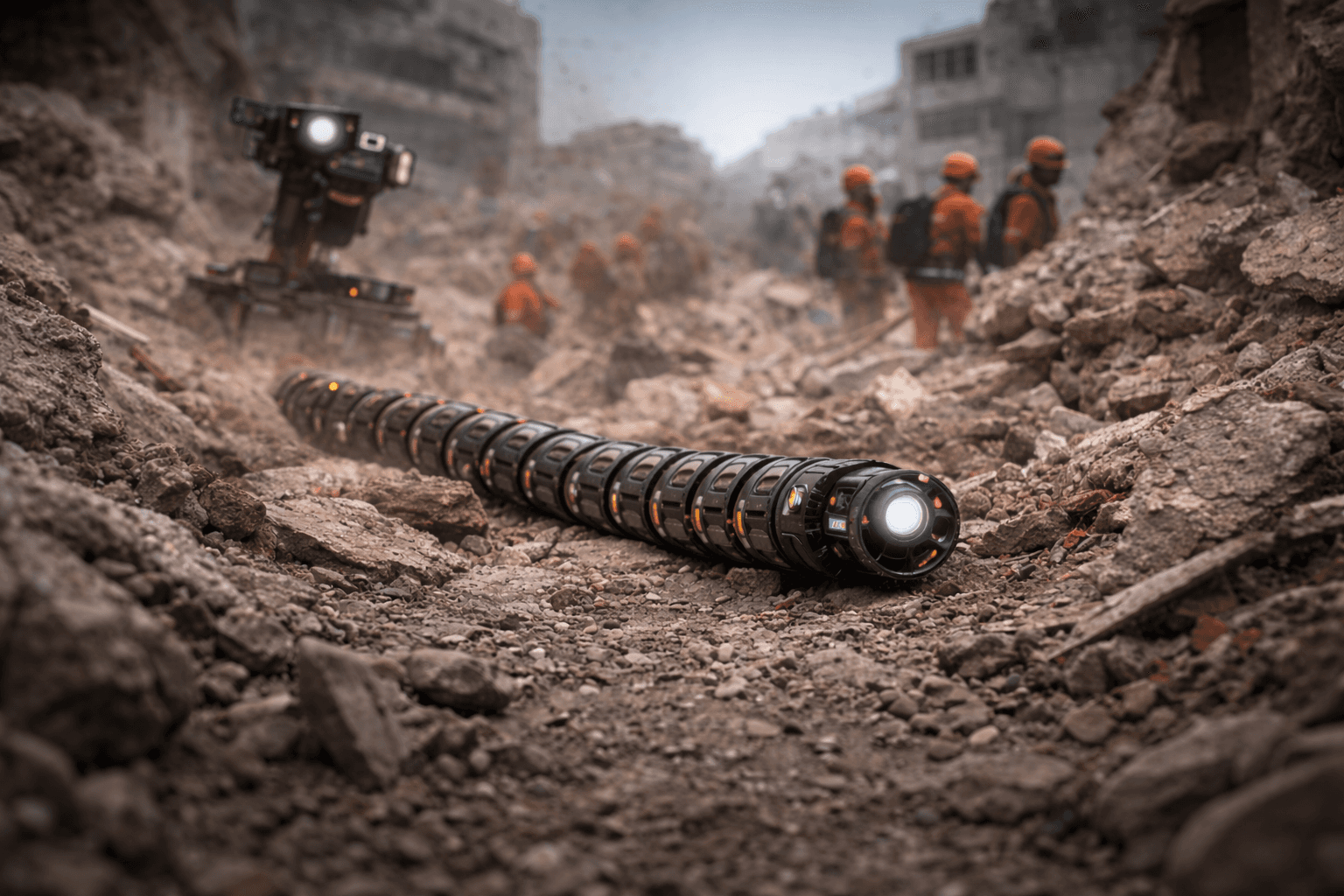
Bio-inspired snake robot designed for confined space navigation in disaster response and inspection missions

2026 — The Turning Point for ReOps and Rescue Robotics

Rescue robotics is moving rapidly from research labs to real-world deployment. Governments, defense agencies, and disaster management authorities now prioritize:

  • Field-ready robotic systems

  • Proven reliability

  • Rapid deployment in emergencies

The future of disaster response will be human-led but robot-enabled.

Robots will:

  • Enter first

  • Map hazards

  • Locate survivors

  • Reduce risk to responders

Humans will:

  • Make strategic decisions

  • Perform medical intervention

  • Coordinate large-scale operations

ReOps (ReOps Intellitech Inc) is building advanced robotic systems designed to go where humans cannot—when every second matters.

2026 is not just another year for robotics.
It is the year search and rescue robotics becomes a necessity.
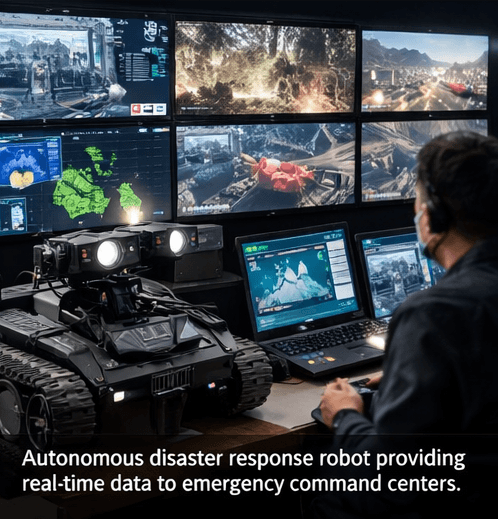

Autonomous disaster response robot providing real-time data to emergency command centers

Partner with

ReOps

to Shape the Future.

Technology

Fire Eye

COMING SOON

AutoFill Pro

COMING SOON

Socials

ReOps Intellitech Inc. © 2025 All Rights Reserved

Developed by

Partner with

ReOps

to Shape the Future.

Technology

Fire Eye

COMING SOON

AutoFill Pro

COMING SOON

Socials

ReOps Intellitech Inc. © 2025 All Rights Reserved

Developed by

Partner with

ReOps

to Shape the Future.

Technology

Fire Eye

COMING SOON

AutoFill Pro

COMING SOON

Socials

ReOps Intellitech Inc. © 2025 All Rights Reserved

Developed by

Partner with

ReOps

to Shape the Future.

Technology

Fire Eye

COMING SOON

AutoFill Pro

COMING SOON

Socials

ReOps Intellitech Inc. © 2025 All Rights Reserved

Developed by